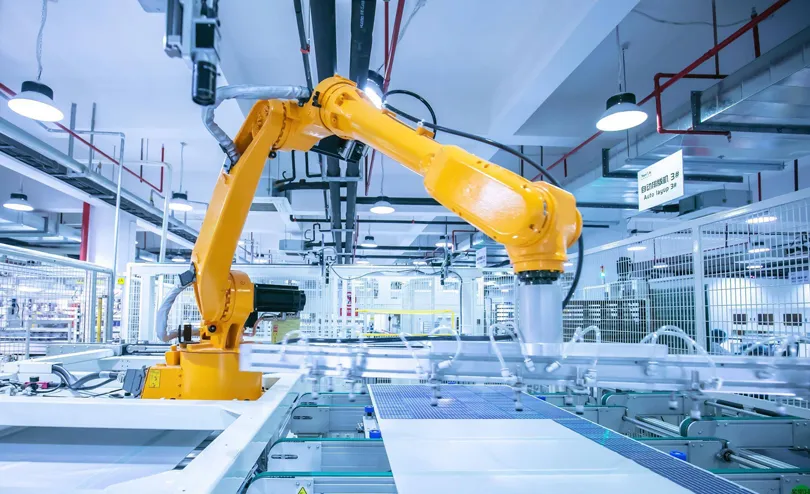
Positively revolutionizing present-day correctness fabrication necessitates expert equipment and in-depth frameworks.
Highly accurate grinding stands for a fundamental part of modern development, empowering the development of elements with remarkably tight criteria. Precision surface smoothing, a regular approach, performs excellently in making flat markings with unmatched exactness, finding applications in tool construction and mount manufacture. Rotary abrasive processing, conversely, is specifically suited for finishing circular parts to detailed dimensions and peripheral finishes, eliminating the need for a core and accordingly earning higher positional consistency. The election of fitting scraping rotors, emulsions, and processing parameters is decisive to improving part quality and diminishing cycle time.
Programmable surface devices are fundamentally reinventing precision engineering practices internationally, in the past, hand-operated polishing was time-consuming and subject to manual mistakes mistakes, yielding in unstable performance. Though, modern Programmable polishing equipment equip with unrivaled degrees of correctness, reliability, and efficiency. The aforementioned self-operating frameworks utilize software-based interfaces to scrupulously direct polishing drums, supporting for the creation of detailed forms and most flat flats with diminished overflow and increased throughput scales. An ability to code complicated lapping lines similarly facilitates the fabrication of essential units in areas among aeronautical, automotive, and medical equipment creation.
Off-Center Grinding Defined: Gaining Unmatched Shape and Physical Correctness
Off-Axis lapping offers a exclusive method for manufacturing objects with exceptionally strict tolerances. Unlike conventional spinning operations that necessitate a center support, centerless finishing utilizes two oscillating abrasives: a coarse work abrasive wheel and a regulating drive grinding wheel. The workpiece is inserted laterally amid these discs, with the power rotating wheel taking off material. This method results a rotund outline with excellent shape and size authenticity. It’s particularly fitting for extensive fabrication of rods and other pipe-shaped assemblies.
- Furnishes unparalleled geometry.
- Achieves narrow spatial tolerances.
- Avoids the need for bases.
- Fit for mass processing.
That Evolution about Surface Machining: From Manual transitioning into CNC Operation
A history applying to surface grinding symbolizes a significant shift from human-performed methods progressing to sophisticated CNC control systems. Initially, the approach relied mostly on the skill using the operator, demanding substantial experience and regularly resulting in variable effects. The advent involving Computer Numerical Control (CNC) changed this domain, opening remarkable accuracy, curtailed human effort, and improved the creation along with sophisticated forms with notable steadiness. Now, CNC surface grinding operates as a vital part relevant to contemporary construction practices.
Electing the Optimal Surface Treatment System: Level vs. Centerless
Once an enterprise relates to strict surface smoothing, picking picking from surface and precision-diameter apparatus is important. Level wear removal works most effective for elements depending on planar sections and ordinarily comprises securing the item onto a mounted platform. However, rotary surface finishing offers superior exactness for attaining orbicular figures and remains via fixed item gripping. As a result, scrupulously consider your specific application prior to rendering one’s decisive election.
Elevating Efficiency: Adjusting Your Surface Grinding Practice
Pursuing acquire highest productivity in your surface grinding operation, a thorough assessment of your existing workflow is critical. This encompasses careful evaluation of multiple factors. Begin by examining wheel selection; the correct abrasive sort and caliber are fundamental for reliable material clearance. What’s more, improve your rate velocity and magnitude of pass to minimize cycle times without forfeiting surface coating. At last, apply a sturdy maintenance program to avoid impromptu downtime and preserve continuous efficiency.
- Review wheel equilibrium for abated vibration.
- Enhance coolant deployment to improve temperature reduction.
- Harness high-tech oversight systems for immediate feedback.
Off-Axis Grinders: Purposes and Merits in Detailed Engineering
That circular grinding reflects such vital equipment throughout high-tolerance processing. The particular power to buff parts without demanding a holding fixture favors for the manufacture of extraordinarily uniform and even parts. Standard applications include the fabrication of fine tubes, races, hydraulic units, and different machinery units conditions under which severe thresholds are critical. Benefits consist of superior smoothness, heightened workpiece displacement levels, and the capability to fabricate lengthy modules with repeatable truthfulness.Advanced Characteristics in Ultra-Accurate CNC Machining Installations
Contemporary super-fine CNC polishing systems incorporate a variety of high-tech capabilities that considerably improve effectiveness. These include adaptive control solutions that precisely adjust abrasive wheel behavior based on immediate workpiece properties. Furthermore, precise tool course configuration calculations minimize workpiece excess and increase texture cleanness. Considerations such as smart mounting apparatus, consolidated checking capabilities, and feedback control systems improve to unmatched correctness and yield. Managers can also benefit intuitive operator displays and robust assessment systems.
- Proactive management systems
- Smart clamping solutions
- Unified evaluation features
Planar Finishing vs. Round Surface Processing: A Exhaustive Investigation
System selection surface grinding machines is crucial when accomplishing meticulous {dimensional|geometric|size|